


















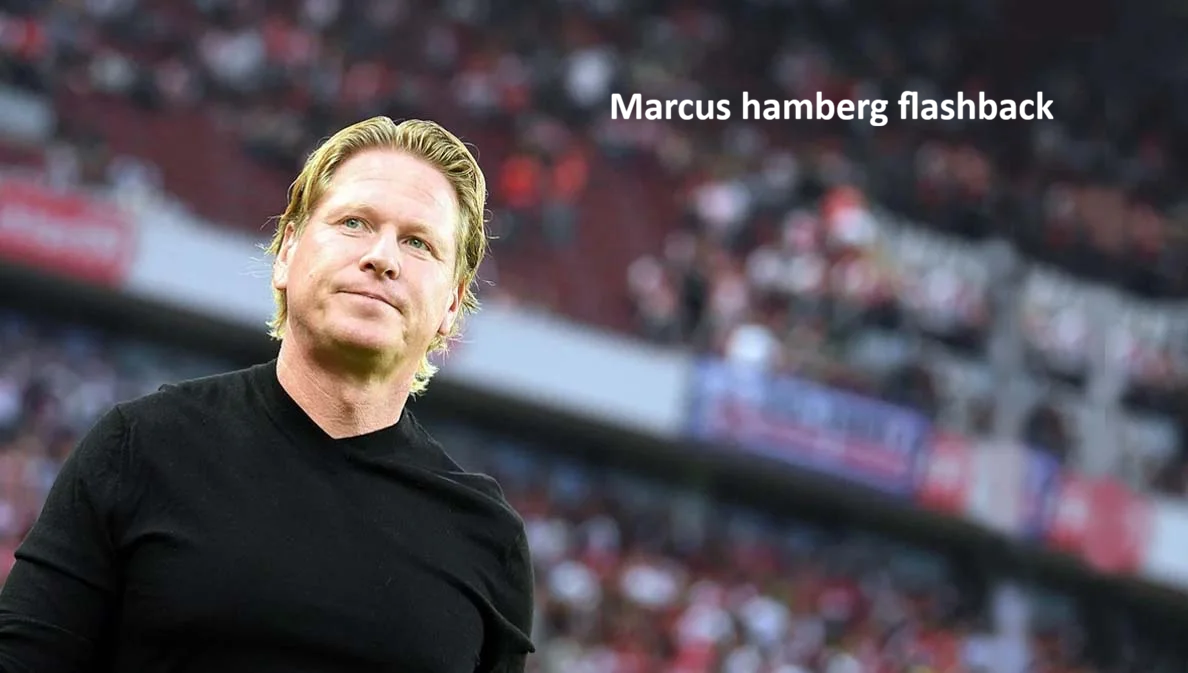
The phrase Marcus Hamberg flashback carries a strangely emotional weight, even though it isn’t attached to a globally famous celebrity or mainstream figure. Instead, it feels like the kind of phrase that belongs to a deeper story — one tied to memory, reflection, identity, and the human tendency to revisit moments that shape who we are. When people search for something like “Marcus Hamberg flashback,” they are often looking for more than basic information. They are looking for meaning, context, and narrative. And that is exactly where this topic becomes fascinating.

A flashback, by nature, is never just about the past. It is about how the past lives inside the present. When the name Marcus Hamberg is paired with the concept of flashback, it suggests a layered story: one of experiences revisited, lessons reprocessed, and moments that refuse to fade quietly into memory. Whether interpreted as a personal narrative, a symbolic identity, or a conceptual figure, the idea behind Marcus Hamberg flashback opens the door to exploring how memory shapes perception and how storytelling gives depth to identity.
The Psychology Behind a “Flashback” and Why It Feels So Real
Before fully understanding the emotional tone behind Marcus Hamberg flashback, it helps to understand what a flashback truly represents. Psychologically speaking, a flashback is not just remembering something. It is reliving it. The brain reconstructs a moment with such emotional detail that it can feel immediate, present, and intense. This is why flashbacks often feel vivid, cinematic, and emotionally powerful.
If Marcus Hamberg represents a person reflecting on life experiences, then the “flashback” element becomes the core of the story. It suggests a character shaped by memories, perhaps someone who revisits key moments to understand growth, mistakes, success, and transformation. This idea resonates strongly with modern audiences because many people today are deeply engaged in self-reflection. We live in an era where identity is constantly examined, mental health is openly discussed, and personal growth is seen as an ongoing journey rather than a fixed destination.
The power of Marcus Hamberg flashback lies in its relatability. Everyone has moments they replay in their mind — conversations they wish they handled differently, decisions that changed everything, opportunities they seized or missed. The phrase captures that universal experience in a way that feels personal yet broad enough to connect with a wide audience.
Marcus Hamberg as a Symbol of Personal Evolution

One of the most compelling interpretations of Marcus Hamberg flashback is to view Marcus Hamberg not just as a name, but as a symbolic figure. In storytelling, names often become representations of ideas. Marcus Hamberg can be seen as the kind of person who reflects deeply, who values growth, and who understands that the past is not a burden but a teacher.
This makes the concept incredibly powerful. A flashback, in this sense, is not about regret. It is about awareness. It is about looking back with maturity and extracting wisdom. Many successful people speak openly about revisiting their past experiences, not to dwell on pain, but to understand the journey. That is what gives depth to the idea behind Marcus Hamberg flashback. It suggests emotional intelligence, self-awareness, and the ability to transform memory into insight.
People who resonate with this concept often appreciate nuanced thinking. They understand that life is rarely black and white. Instead, it is built from layers of experiences, contradictions, lessons, and turning points. The narrative of Marcus Hamberg flashback feels like a reflection of that complexity.
Why the Concept Feels So Relevant in Today’s Digital World
In today’s world, flashbacks are no longer only internal experiences. Social media, digital archives, old photos, saved messages, and “memory” features constantly bring the past back into the present. This creates a culture where reflection is almost unavoidable. The idea of Marcus Hamberg flashback fits naturally into this environment because it feels like a modern concept, even if it is framed in a timeless way.
People are more reflective now than ever before. They document their lives, revisit old content, and analyze how they have changed over time. The emotional experience of seeing an old version of yourself, remembering who you used to be, and comparing it with who you are today is deeply powerful. The phrase Marcus Hamberg flashback captures that emotional journey beautifully. It suggests depth rather than surface-level nostalgia.
It also speaks to authenticity. In an age where curated perfection dominates online spaces, flashbacks often reveal the raw, unfiltered truth. They show growth, vulnerability, struggle, and resilience. That is why the emotional core of this concept feels so genuine. It does not rely on hype. It relies on human experience.
The Storytelling Power Behind the Keyword
Another reason why Marcus Hamberg flashback stands out as a topic is its storytelling potential. It feels like the title of a memoir, a short film, or a reflective novel. It sparks curiosity. Who is Marcus Hamberg? What happened in his past? Why do his flashbacks matter? These unanswered questions are exactly what make the phrase so engaging.
Strong storytelling is built on memory. Every meaningful story involves moments from the past that shape the present. When you frame a narrative around flashbacks, you automatically create emotional depth. You invite the audience to explore motivations, regrets, growth, and identity. That is why this keyword works so well from a creative and psychological perspective. It is not just a name and a word. It is a doorway into a narrative.
For writers, creators, and thinkers, the concept of Marcus Hamberg flashback becomes a canvas. It allows exploration of themes like transformation, self-discovery, emotional healing, ambition, failure, resilience, and perspective. These are universal themes that never lose relevance.
Why People Are Drawn to Reflective Narratives Like This
Humans are wired for stories, especially stories that feel real. Reflective narratives resonate because they mirror our inner world. The idea behind Marcus Hamberg flashback feels authentic because it doesn’t feel like a polished brand. It feels like a lived experience. That authenticity is what draws people in.
People are tired of shallow content. They crave depth. They want stories that make them think, feel, and relate. Flashback-based narratives naturally offer that depth because they focus on emotional truth rather than surface events. This is why the emotional tone behind Marcus Hamberg flashback feels compelling even without concrete public fame attached to the name.
It becomes less about who Marcus Hamberg is in a literal sense and more about what he represents emotionally and symbolically. That is powerful storytelling.
The Timeless Nature of Reflection and Memory
What ultimately makes the concept of Marcus Hamberg flashback so strong is its timelessness. Trends come and go, but reflection remains. People will always look back on their lives. They will always revisit memories. They will always try to understand their own journey.
That is why this keyword feels like it belongs to something deeper than a simple search query. It feels like part of a larger conversation about identity, growth, and meaning. Whether interpreted as a fictional persona, a symbolic name, or a real individual whose story invites reflection, the emotional core remains the same.
Marcus Hamberg flashback represents the human experience of looking backward not with weakness, but with wisdom. It represents the idea that our past is not something to escape, but something to understand. That perspective is mature, emotionally intelligent, and deeply relevant in the modern world.
Conclusion
The concept behind Marcus Hamberg flashback goes far beyond a simple phrase. It represents memory, growth, reflection, and the emotional depth that defines the human experience. Whether viewed as a symbolic identity or a narrative lens, it captures something deeply relatable: the way we revisit our past to better understand our present. In a world driven by speed and surface-level content, the reflective tone behind Marcus Hamberg flashback feels refreshing, meaningful, and timeless. It reminds us that our stories matter, our memories shape us, and our ability to reflect is one of the most powerful tools we have for growth.